



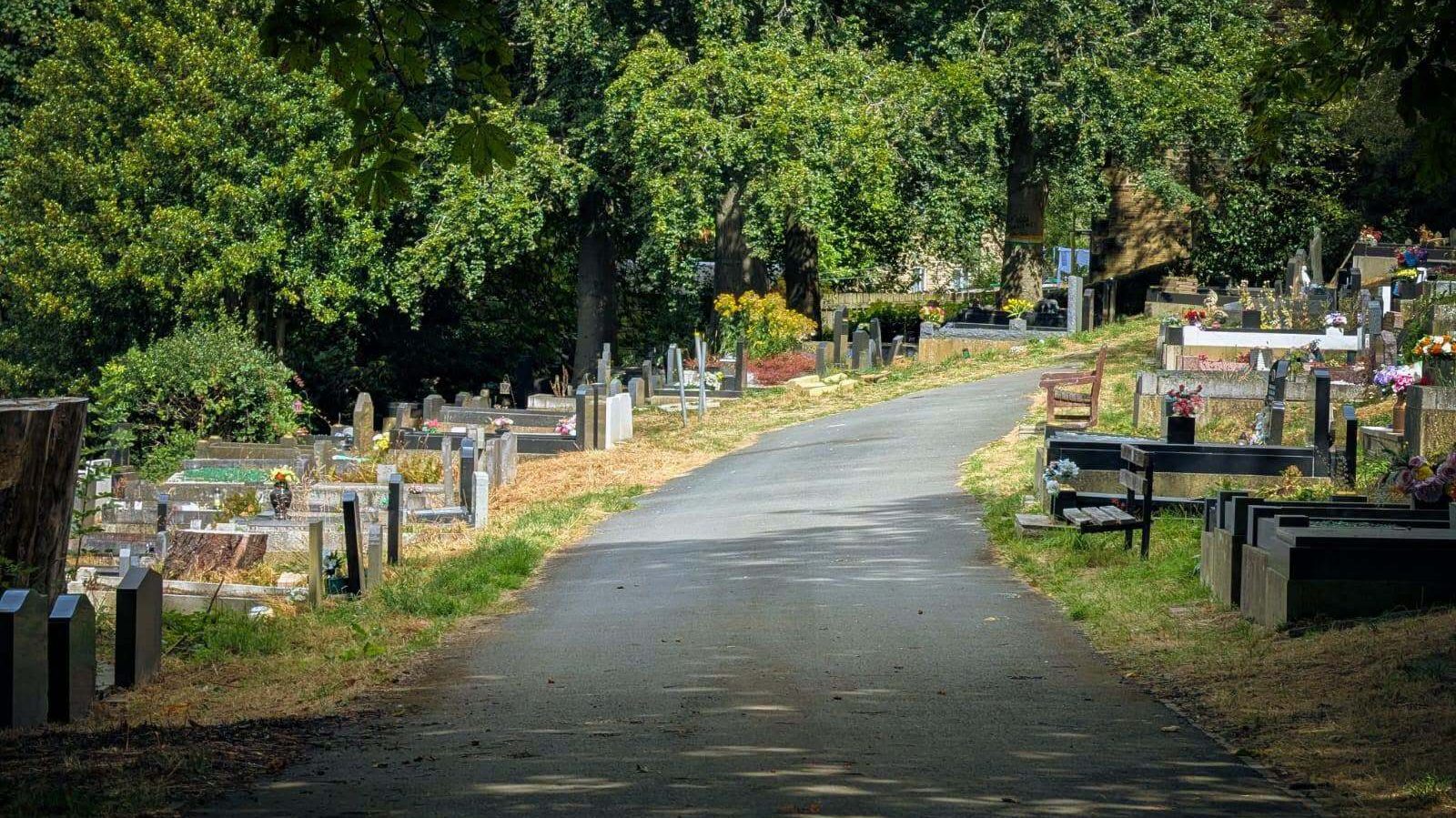
Opened in 1861 and laid out by landscape designer Edward Milner, Stoney Royd Cemetery remains one of northern England’s finest surviving examples of a picturesque Victorian public burial ground.
Its sweeping views and winding pathways form Halifax’s largest burial site. Today, the Grade II listed Park and Garden, and the resting place of 79 Commonwealth War Graves, continues to serve families for interments and is jointly cared for by Calderdale Council’s Bereavement Services and dedicated volunteer group: The Friends of Stoney Royd.
The Friends of Stoney Royd was founded in August 2025 by local resident Krzysztof‑Piotr Pawel Wojtyla, who felt the cemetery deserved community guardianship.
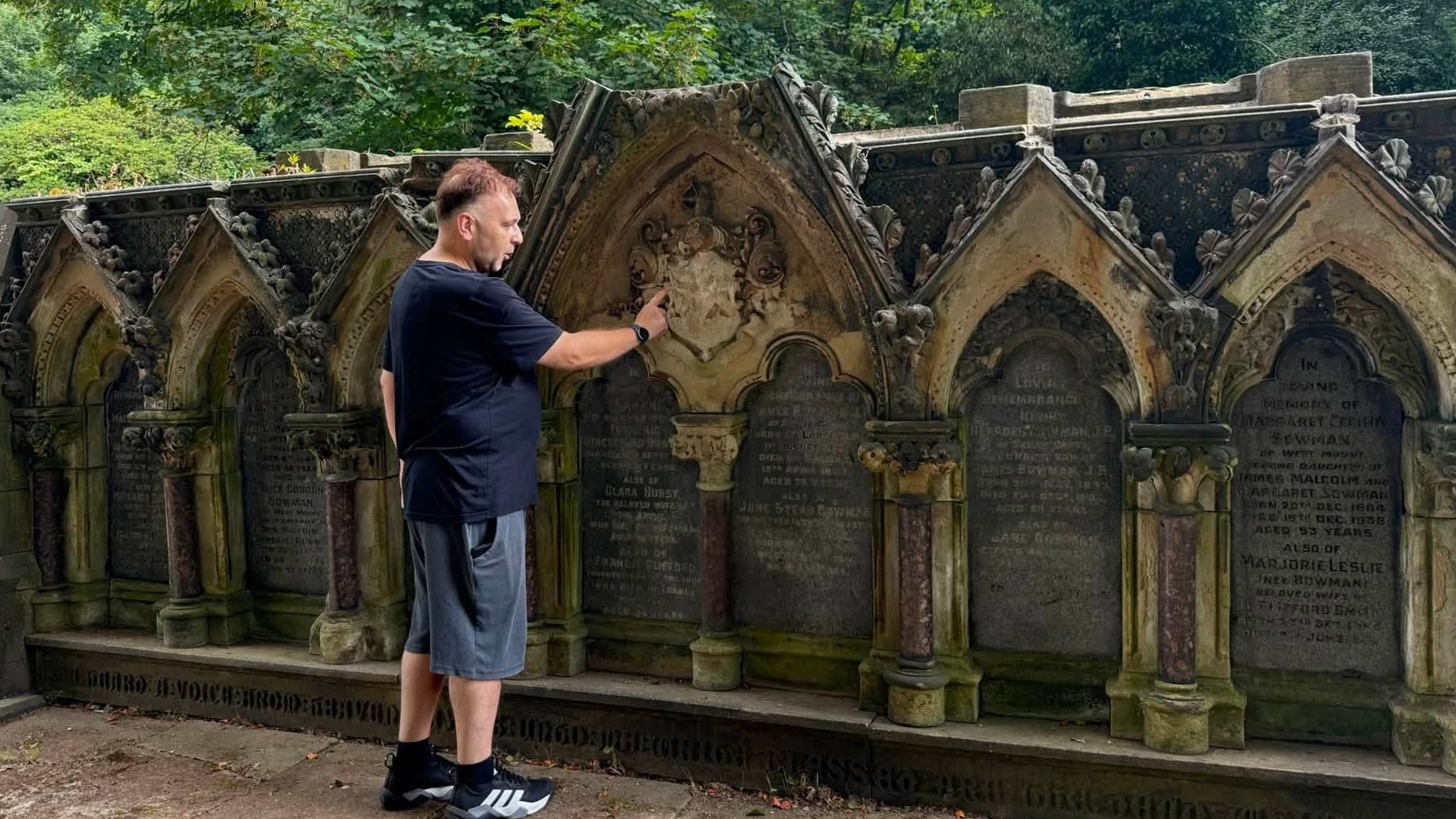
“My late grandparents are buried here. It’s a wonderful place, rich with history and the final resting place of thousands. I want the community to feel pride in it and to know it’s cared for. That’s why I set up the Friends group,” said Krzysztof.
What began as one person’s commitment has since grown into a team of 12 active volunteers and a wider network of over 550 supporters through their Facebook page. Members include residents, family historians, conservationists and nature lovers, all united by a desire to protect this peaceful and significant part of Halifax’s heritage.
“We’re committed to preserving the site. Any damage or concerns we find are reported straight to the Council, and anything historically interesting is documented. It’s all about respect, care and continuity.”
The Friends’ work often involves gently uncovering what time has hidden. Recently, volunteers revealed several graves belonging to the Passionist Order, located near the now‑derelict Catholic chapel.
After contacting the Sisters of the Cross and Passion, Krzysztof was entrusted with the ongoing care of the Passionist Sisters’ graves, a responsibility he describes as “an honour and a privilege.”
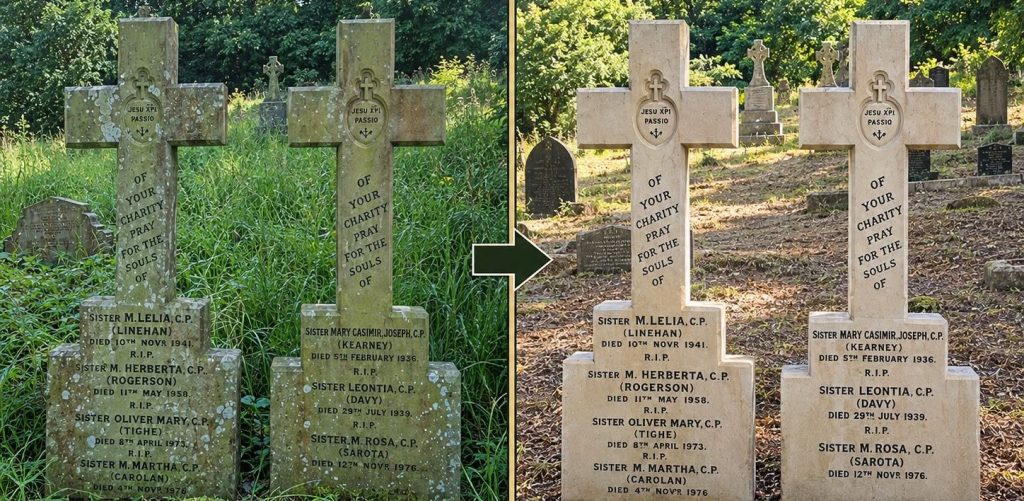
Their work extends far beyond tidying and maintenance. Volunteers regularly rediscover old pathways, memorials and sections of the cemetery that have been concealed for decades, bringing forgotten stories back into public memory.
The Friends are deeply committed to ensuring those buried at Stoney Royd are remembered. Their newest initiative, the Find a Grave Project, aims to photograph, transcribe and index memorials so that families, researchers and the wider public can search burial records online.
The project is expanding rapidly, and more volunteers are needed, whether to photograph headstones, explore burial registers, delve into newspaper archives or help trace family histories.
Alongside this work, the Friends also take great pride in caring for the cemetery’s natural environment. Stoney Royd is home to stags, deer, hedgehogs and foxes, all making their home among the trees.
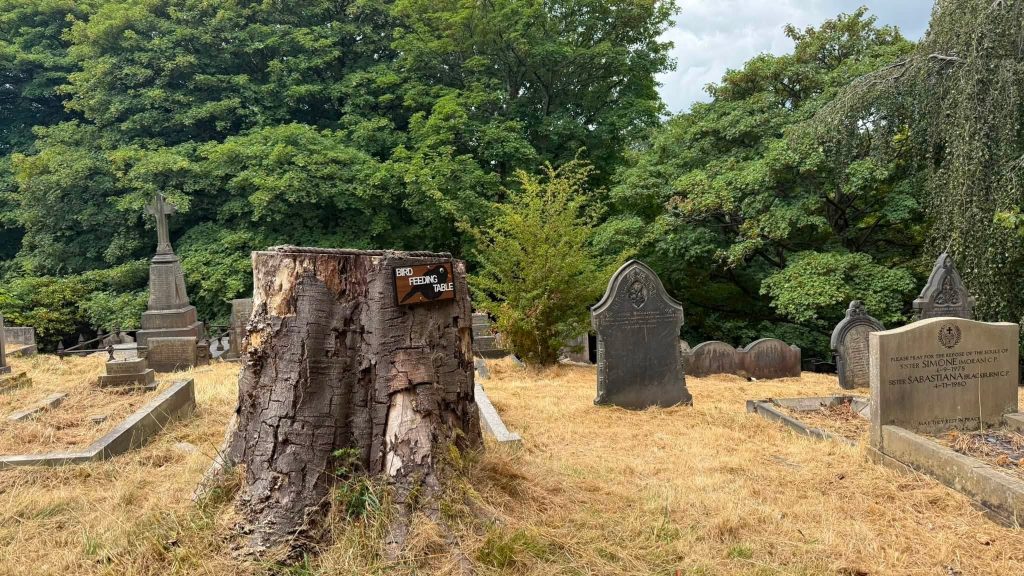
To support this thriving ecosystem, volunteers have installed seven bird‑feeding tables throughout the grounds, encouraging biodiversity and offering visitors moments of quiet connection with nature.
As part of this year’s Heritage Open Days Festival (11–20 September), the Friends will host their first official heritage walk on Saturday 12th September at 10 am.
The walk offers a chance to explore Stoney Royd’s layered history with those who care for it every week.
Those joining will have the opportunity to learn about prominent local figures, clergy and faith communities, Commonwealth war graves, forgotten memorials, the cemetery’s connection to the former St Luke’s Hospital and ongoing restoration and conservation projects.
More information: A walk around Stoney Royd – Heritage Open Days
The Friends also plan to organise gentle, reflective events throughout the year to honour loved ones at poignant times of year.
Updates, history and event details can be found on their Facebook page: Friends of Stoney Royd Cemetery
Volunteer with the Friends
The Friends of Stoney Royd welcome new volunteers, whether you’re passionate about heritage, nature, photography, research or simply want to help care for a beautiful and historic place.
If you’d like to get involved, they’d love to hear from you!
